Tuesday, October 23, 2012

The Bridge - Trite, Predictable, and Bah-Humdrum


Molly Allen is a poor, little rich girl under her father’s thumb, her destiny as heiress to her father’s west coast corporation already determined.  Delighted that her pater loosened the reigns a bit to indulge her desire to attend college in Tennessee, Molly wistfully finds herself in love with the handsome, talented Ryan Kelly, a middle class boy from Georgia.

Molly and Ryan often find themselves in The Bridge, a quaint, privately owned bookstore, looking into each other’s eyes - breathlessly quoting Jane Eyre as they encourage each other’s dreams.

Charlie and Donna Barton, the middle-aged owners of The Bridge, smile approvingly at the young couple, knowing romance in bloom when then see it.

But alas, the love of Molly and Ryan is not meant to be.  A paternally-induced misunderstanding separates our tragic pair for five years – each thinking the other is married to someone else.

The story of these star-crossed lovers is not the only catastrophe in this novel.  The Bridge, a Franklin Tennessee institution for over 30 years, is closing after a devastating flood.  Charlie and Donna’s insurance won’t cover the cost of reopening.  Depressed and hopeless, Charlie ends up in an accident, which leaves him on life support, just weeks before Christmas, his devoted wife anxiously wondering if he will ever wake up again.

Yep, Karen Kingbury’s latest, The Bridge, has all the elements of a Victorian tragedy.  Set right before Christmas, Molly and Ryan find themselves together again in an attempt to save The Bridge and the Bartons.

Truth is, I really wanted to like The Bridge.  The Kingsbury books I have read I have liked, even her last book, Coming Home, which her even her most devoted fans angrily denounced, vowing never to read another of her novels.

Say what you will, Kingsbury has been an institution in Christian fiction, and although her past two books were panned, she has penned some incredibly moving faith fiction.  It is because of her track record that I wanted to like this latest book, hoping that it would pull her out of her recent literary tailspin.

So at the risk of sounding like a Scrooge, this Christmas-time novella is, at its best, bah-humdrum, at it’s worst, trite and embarrassingly predicable.

The plot was as stale as last year’s fruitcake, and the characters were like something from an 8th grade girl’s creative writing assignment.

And the climactic Christmas eve ending?  It was so cheesy I had an undeniable craving for a big bowl of tortilla chips.

It pains me, it truly does.  Kingsbury can write better than this.  Unfortunately, The Bridge seemed nothing more than a hastily written novel timed to cash in on Christmas and the Kingsbury name.

Sadly, I must confess, this book is one bridge you will not want to cross.

Courtesy copy of The Bridge obtained from Howard Books in exchange for an honest review.

Sunday, October 14, 2012

Glorious Ruin - A Challenging View on Suffering


Humans, as a whole, don’t like suffering.  Our society, especially, does everything in its power to avoid it.  When we suffer, whether it’s a minor irritation or a major trauma, we treat it as an anomaly, something that should not happen in our world of rainbows and happy places. 

Even in the church, suffering can be seen as a lack of victory or worse, a lack of faith.
Glorious Ruin, by Tullian Tchividjian, unpacks the theology of suffering with no apologies; honestly examining the harsh reality that suffering is part and parcel of this fallen and sin-infused world.

According to Tchividjian within Protestantism there are two separate systems of theology: the theology of the cross, which claims that the cross is the only way to know God and how God saves and, the theology of glory, which is man-centered and places greater weight on human reasoning and ability.

Comparing and contrasting the theology of the cross and the theology of glory, (concepts coined by Martin Luther), Tchividjian proposes that we can’t avoid suffering. In fact, avoiding suffering isn’t the goal – the goal is to acknowledge suffering, embrace suffering, and find God in the middle of it.

Tchividjian is tough in his theology-of-the-cross-centered stance.  He takes the gloves off when dealing with the man-centered prosperity gospel, which equates lack of suffering with the strength of our faith. 
He also challenges the humanistic slant on suffering or what he calls the Oprah-fication of suffering, where we find meaning in suffering through transforming our lives into something better – a pathway to self-improvement.

Although I agreed with a majority of Tchividjian’s viewpoints, it was a convicting read, nonetheless.
Glorious Ruin is a book that confronts our demands to minimize and moralize suffering.  It’s a call to not ask “why” in the face of tragedy but to draw closer to the God in the midst of it. 

A courtesy copy of Glorious Ruin provide by David C Cook through Net Galley in exchange for an honest review.

Thursday, October 11, 2012

The Ultimate Conversation- The Ultimate Prayer Primer


As the steam rises aromatically from my bowl of Spaghetti –Os, I clasp my hands together, bow my head and recite: “God is great. God is good.  Let us thank Him for this food.  Amen.”    I speak the prayer perfectly, or as perfectly as a lisping 4-year-old can. 

It was the first prayer I learned.  I later graduated to “please-bless-fill-in-the-blank” prayers as I knelt by my stuffed-animal-ladened bed.

As I got older my prayers became more sporadic – reserved for moments of pure panic, say, in the midst of a physic test I forgot to study for.

As I reached adulthood and began seeking Jesus in earnest, I realized there was so much more to prayer than recited graces and terror-induced supplications.

Taking my first baby steps in my Christian walk years ago, I could have used the gentle wisdom and Bible-based information found in Charles Stanley’s recent book, The Ultimate Conversation – Talking with God Through Prayer.
I
n it, Stanley offers his readers the ultimate primer on prayer.

What is prayer?  Who are you praying to? What might be hindering you in your prayer life?  Stanley covers the basics of an intimate conversation with God. What he comes back to again and again is simply this: God wants, more than anything, a deep relationship with his children, to connect with us in those moments of profound, extended prayer.

Sharing his personal experiences, Stanley makes spending time in prayer seem the most desirable experience on the planet.  Something to strive for.  Something to live for.

Over the decades, Charles Stanley has proven himself a steadfast bastion of Christian teaching and his book is a trustworthy explanation of all aspects of Biblically-based prayer.

But if I’ve given the impression that this is a new-believer’s book and it has no place on the shelf of a mature believer, I apologize.  The Ultimate Conversation is vintage Stanley, full of spiritual truth that will resound with all believers.  Stanley’s well-grounded writing on prayer does not disappoint.

Whether just beginning your spiritual journey or further along the path, The Ultimate Conversation will strengthen and revitalize your own conversation with God.

Free advanced reader copy of The Ultimate Conversation received from Howard Books in exchange for an honest review.

Tuesday, October 9, 2012

The Queen of Katwe - A Gritty Inspiration


Phiona Mutesi is one of the best chess players on earth.  At 11 she was her country’s junior champion, at 15 a national champion.  Soon after she traveled to Russia to participate in the Chess Olympiad, the most prestigious event in the Chess world.  Only in her teens, she sat across the board from experts several years older, yet she played with an intensity and instinct that had more experience players struggling to keep the upper hand – and not always succeeding.

Her command of the game at such a young age certainly had people talking.  Certainly she must have the best of coaches, the best education, and the best backing to be as good as she is.  Certainly the best chess players have the best pedigree.

Certainly….not.

Phiona Mutesi is from Uganda, a country at the bottom of the pecking order of African nations.  And she lives at the bottom of the pecking order of Uganda itself.  She’s a child of Katwe - one of the worst slums in the world.

The Queen of Katwe, by former Sports Illustrated senior writer, Tim Crothers, is a gritty inspiration.  Crothers introduces us to a culture where human life is cheap.  Where life, moment to moment, is not guaranteed.   Where a teen girl’s goal is to give herself to a man, or more than one man, in order to secure food and shelter – and hopefully support for children when she gets pregnant.  But in a country rampant with AIDs, it’s not uncommon for that male support to succumb to the disease and leave his offspring homeless and scraping for food.

This was the life that Phiona was born into.  A world of mind-numbing destitution and hopelessness. 

But while Phiona and other children like her fought to survive in the squalor that is Katwe, there were people who were determine to bring hope.

People like Robert Katende who grew up in Katwe and fought his way out.  A man of strong faith and a passion to mentor and love the kids who found their way to the Sports Outreach center every day to get a bowl of porridge and learn chess.

People like Russ Carr, on staff at Liberty University, who, 25 years ago, founded the Sports Outreach Institute that uses sports as an inroad to missionary work in third world nations.

And people like Norm and Tricia Popp who established the Andrew Popp Memorial Scholarship to help Ugandan slum children get an education, after their son’s tragic death.

Crothers masterfully intertwines these stories until each life intersects at the moment when a shy, filthy little girl first placed herself in front of a chessboard.

Rooks, bishops, knights, pawns, queens and kings fought for survival and dominance on the board.  Each move that Phiona made would mean win or lose – a check- checkmate reflection of her life in the muddy streets of Katwe.

But her excellence at this game opened doors that would never have been opened to her.  Traveling around the world, sleeping in a real bed in a hotel with toilets and running water, and most of all food, more than she could possibly imagine.

Unfortunately, those tournaments that took her out of Katwe would end, and she would return to the only life she had ever known.

Phiona is still in Katwe, going daily to play chess at a little church outside of the slums.  She has dreams that she dared never to dream before – but getting out of Katwe won’t be easy.  But she has a chance.

The Queen of Katwe does inspire, but Crother’s doesn’t sugarcoat the reality of Phiona’s life in the slums.  Being a chess champion means very little in the mean streets. 

So as Phiona’s gutsy attitude and determination lifts the heart – her situation, and the situation of many Ugandan children like her, can’t help but convict the spirits of those of us who are first-worlders. 

The Queen of Katwe is an important book.  We tend to forget how most of the world lives.  Phiona’s story is a moving reminder that every life holds value, and we have the opportunity to influence the endgame.

Free advanced reader copy of The Queen of Katwe received from Scribner Publishing in exchange for an honest review


Sunday, September 30, 2012

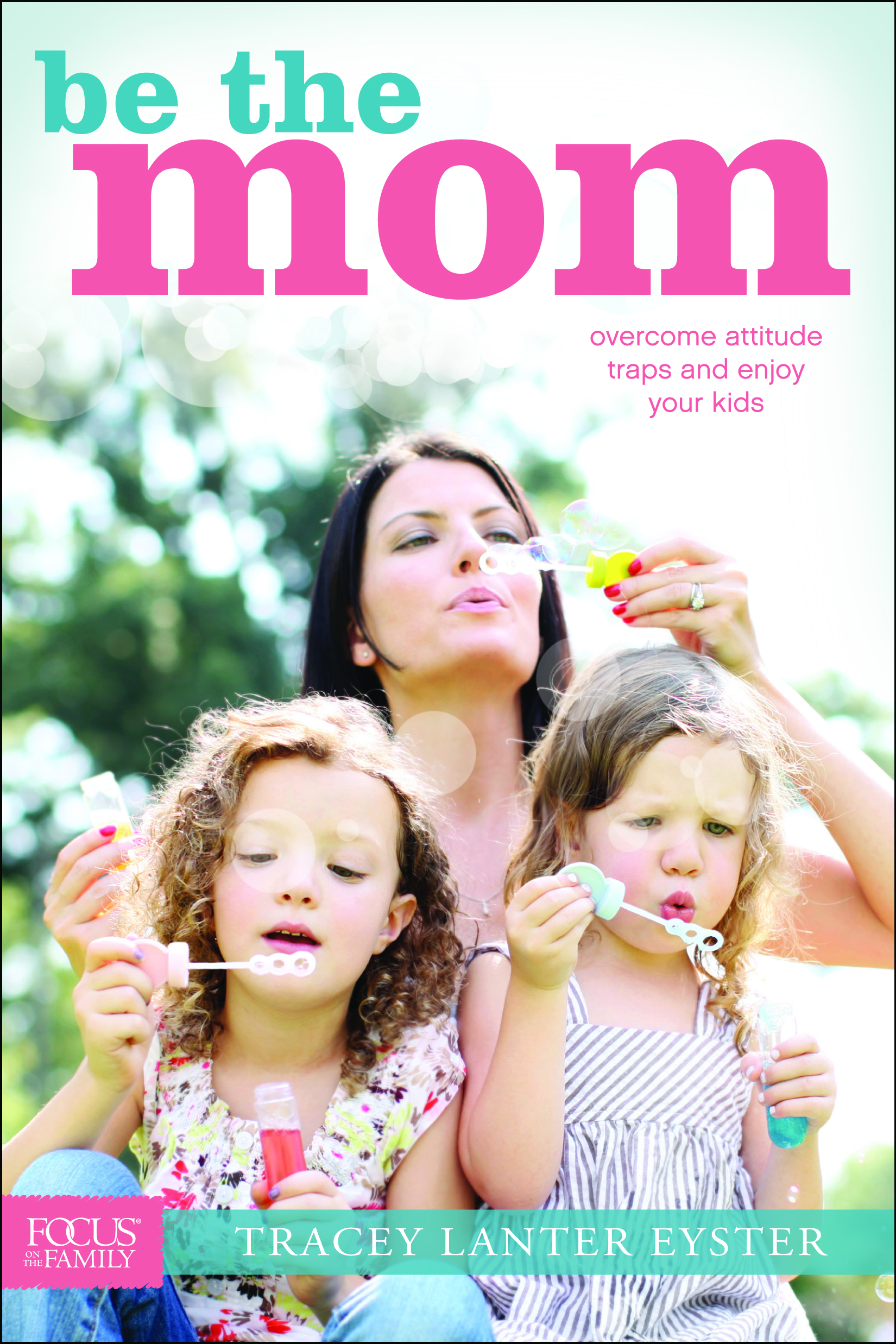
Be The Mom - An Encouraging Shot in the Arm


As a mother who stays at home with her kids, I must admit, I have had these awkward moments when asked what I do for a living.  After answering “Oh, I’m a stay-at-home mom," I see the slight frown and the look of pity and then accept the abrupt shift in the conversation to the weather.

I also admit that in response to that question I have downplayed my motherhood and replied with  “I’m a writer”.  (So cool and bohemian sounding.)  Or, “I’m a youth group leader”. (Never mentioning that I’m a volunteer.)

 To be honest my full-time vocation is a mother to my children. But looking around at our culture, it’s not easy to find anyone who will affirm the importance of motherhood, a voice that will state, without apology, that being a mom is the grandest career a woman could have.

That’s why I so appreciate Tracey Lanter Eyster’s book, Be The Mom.  Overflowing with good-natured advice and encouragement, Eyster clearly communicates her love of motherhood.  Seriously, this book bubbles over with the kind of   “Hey-I- know-what-you’re-going-through-and-I’m-in-your corner” inspiration that will make you want to run out into the street and shout OH YEAH, I’M THE MOM!  Well, okay, I’m exaggerating somewhat.  But if you are a mom struggling with your momhood, this book is a shot in the arm.

Not that Be the Mom is a cover-to-cover pep talk.  Far from it.  Eyster, chapter by chapter, points out the traps that moms can fall into that can damage their relationships with their family and take the wind out of their self-confidence.  From the “Just a Mom” Trap to the “Supermom” Trap, Eyster analyzes those perceptions of motherhood that can tie moms up in knots and cause anxiety-induced thoughts of self-doubt at three in the morning.

Be The Mom is a book that could have easily become a study in maternal shortcomings - the kind of book that makes you not want to a get out of bed in the morning.  But Eyster has the gift of encouragement with a coaching-not-criticizing approach.

Sure she points out the pitfalls of the “Martyr Mom” Trap, but she makes you feel like she’s right in there with you, urging moms on to see the big picture – to see what a gift from God motherhood really is.

Although Be the Mom is primarily a book that encourages the stay-at-home mom, Eyster certainly does not overlook the mom working full-time out of the home.  She admits some moms do have to work, but being the mom should always be of primary importance.

Speaking from experience, being the mom has come with some life adjustments for Eyster, who shunned the corporate ladder in favor of Chutes and Ladders, but she makes it clear, even through the most frustrating and difficult times, it is worth it.

 Advanced reader copy from Focus publishing through Net Galley in exchange for an honest review.

Tuesday, September 4, 2012

The Reason - Deeply Moving and Thought Provoking


In a small Michigan town an enigmatic stranger appears.   Kind, compassionate, and way too insightful…he can look inside a person’s heart, see the history of hurt and, speaking a few words, hold out hope of something better.  Oh, and did I mention the miracles?  Oh yeah, he does those too.

Now before you roll your eyes and determine this is yet another modern-day, stonewashed jean-clad-hipster-Jesus novel, please hold your judgment.   The Reason, by William Sirls is much more than that.  Sure, it doesn’t take reading more than a few pages to realize who the drifter is, but he’s not the center of this story.  Faith is, or more specifically, what it means to “Believe”.

Pastor Jim and his wife Shirley love God, although they are a bit weary keeping a church going that has seen better days.  Their joy is evident even though Jim is blind and they are taking care of their mentally challenged adult son.  But they love the Lord, trust Him and proclaim his faithfulness even under the most dire of circumstances.

 Under Pastor’s care are Brooke and her five-year-old son Alex. Brooke moved in with Jim and Shirley a few years earlier when she was going through a difficult time in her life.  A fairly new believer, she is finally piecing her life, and her faith, back together only to discover that her son has cancer.

Doctors Macey Lewis and Zach Harmon are determined to see Alex through, but they are facing some spiritual issues of their own that the mysterious stranger is going to make each of them confront, even if it means digging up a past that is too painful to bear.

Sirls has populated his novel with authentic characters – solid believers who press on, followers who are struggling with what to believe, and those who think this whole God thing is a crock – all wrestling with belief at one stage or another

Alex’s cancer is the impetus for a lot of soul searching and not just within the characters.  Sirls forces readers to ask themselves “What does it really mean when God asks us to only believe?”.

The Reason is a complex novel holding up the subjects of faith and God’s love and looking at them from various angles.

Yes, the definition of faith is on the line here between the pages of this book.  Can it be that if we have enough faith that the tide can turn in our favor?  Or are we placing our faith in the wrong thing?  Should our faith be in the gift or the Giver, the miracle or the Miracle Maker? 

And is it possible to hear from God and yet totally misinterpret His message?  When bad things happen to good people, is it a sign of weak faith or an opportunity to trust in someone bigger than the situation?  
And when life falls apart, does God really love us?

Sirls’ The Reason is encouraging, inspiring, and challenging – and it’s a good read. And when choosing a book, who needs a better reason than that?


Monday, August 6, 2012

The Romanov Conspiracy- Taut And Complex, Though Morally Questionable


The Russian Revolution was certainly a bloody affair.  Fear and chaos abounded.  It turned an entire nation upside down. And in the center of it all was the brutal assignation of the Tsar and his family.  A murder surrounded in a mystery, which became legendary.  Did the daughter of the Russian royal family survive?

Glenn Meades’ latest novel, The Romanov Conspiracy hits the ground running with a gritty and harrowing account of an attempted rescue of the Tsar and his family during the final days of the Russian revolution.

In the center of the story are Uri Andrev and Leonid Yakov.  Friends since childhood, they find themselves on opposite sides of the revolution.  Bitterness and anger rooted in betrayal and fueled by events spinning wildly out of control cause both men to seek to undo the other.  But even war can’t totally unravel the cords of deep friendship Uri and Leonid had woven over a lifetime.

Paramount to the plot is the Romanov family – the Tsar, his wife and children – including the willful Anastasia, held captive by Lenin’s men and soon to be murdered.  But help is coming in the form of a headstrong Irish gunner runner, Lydia Ryan, and Joe Boyle, a man of mystery who has been on more than one death defying mission.  Together with Uri Andrev they infiltrate Russia, making their way through the chaotic blood-soaked countryside, hoping to free the imprisoned Tsar and his family before it’s too late.

Meades' novel is taut, historically rich, and replete with complex characters.  It will quickly draw you into the horrifying upheaval that was the Russian Revolution and leave you breathless.

However, as an author known well to the Christian market, Meade does promote, albeit subtlety, the worldview that in the midst of heartache and turmoil it’s okay to “love the one you’re with”.  In The Romanov Conspiracy two of the characters find solace in the arms of someone other than their spouse.  The underlying feeling being that God understands.  That, for me, made a stellar novel less great.

A courtesy copy of The Romanov Conspiracy received from Howard Books in exchange for an honest review.